


|
|
Our story → Since 1892
The terroir of Cantina dei Quinti
A land of distinction at the foot of the Alburni Mountains, in the Tanagro Valley
Land, nature and history come together in the area where our vineyards grow. The terroir of Cantina dei Quinti is shaped by the relationship between soil, altitude, microclimate and a landscape deeply connected to the Alburni Mountains and the Tanagro Valley.
Our roots
Precious land
Set amid the striking, unspoilt landscape of the Alburni Mountains, our vineyard stretches across a region steeped in centuries of history, rich in nature and deeply rooted in local traditions.
We are in the area between Contursi Terme and Sicignano degli Alburni, a landscape where mountains, woods, valleys and cultivated land come together to shape the identity of our vineyards.
Close to Cilento, Vallo di Diano and Alburni National Park, this area is set in a natural and cultural landscape of particular significance. Cilento and Vallo di Diano is recognised by UNESCO as a cultural landscape of outstanding universal value, and the park area is also home to the Cilento, Vallo di Diano and Alburni UNESCO Global Geopark.
It is against this backdrop that the terroir of Cantina dei Quinti takes shape, reflecting the relationship between vine and land that guides every stage of cultivation.
Its proximity to the Contursi thermal baths and the mineral characteristics of the area help create a distinctive environment. The stone and mineral components in the soil are part of the natural elements that shape the vineyard and its relationship with the landscape.
The trails winding through the vineyards become routes through nature, history and culture, following a region that continues to thrive in harmony with its roots.
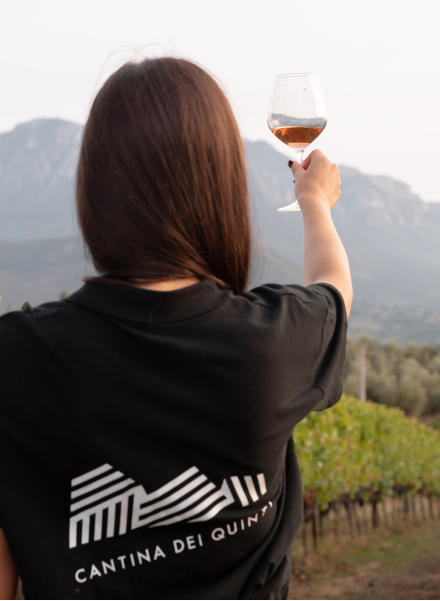
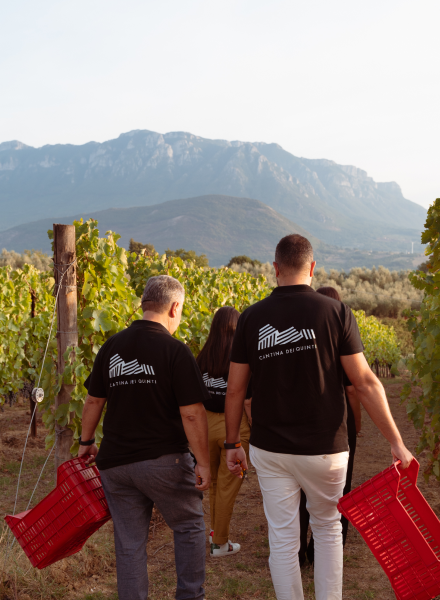
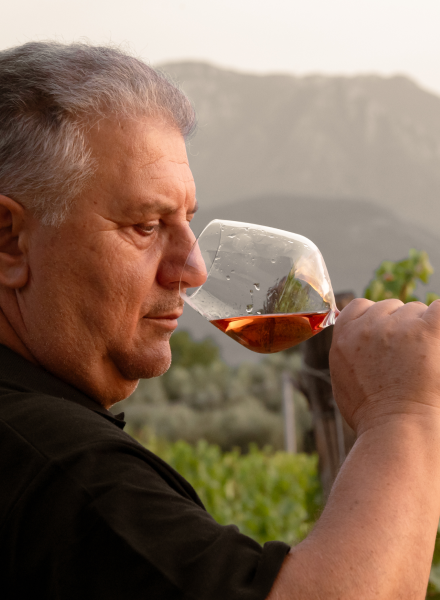
In the heart of the region
Monti Alburni
180–200 metres above sea level
Contursi Terme and Sicignano degli Alburni, in the Monti Alburni area and the Tanagro Valley.
Our vineyard stretches across land steeped in ancient stories, with a natural beauty deeply connected to the surrounding landscape.
The Alburni Mountains are one of the defining features of this landscape. The mountain range is part of an area characterised by limestone formations, karst features, caves and extensive woodlands—features also recognised within the UNESCO Global Geopark of Cilento, Vallo di Diano and Alburni.
The vineyards’ location, at an altitude of between 180 and 200 metres, allows the vines to grow within this unique natural balance. Altitude, exposure, soil characteristics and climate come together to shape the terroir of Cantina dei Quinti.
The character of our land
Nature and history
Our vineyards benefit from a unique microclimate, characterised by mild temperatures and natural ventilation—conditions that support the grapes as they ripen throughout the growing season.
This setting, together with the soil characteristics and the presence of tuff stone, contributes to the character of the grapes and wines produced in our vineyard.
The mineral content of the soil is one of the elements that connects a wine to the place where it is born. Soil, climate, aspect and vineyard work all contribute to shaping an identity that takes the land as its starting point.
Every sip aims to tell the essence of this land, on a journey through woods, peaks, vineyards and ancient stories.
Our approach
L’Antece
The Antece also represents the bond between history and nature: an ancient rock sculpture linked to the Alburni area, it symbolizes the deep relationship between people and the landscape that has endured through the centuries.
Its presence evokes a land inhabited and lived in since ancient times, where the natural landscape and human presence have continued to intertwine.
One of our wines is dedicated to the Antece. The Antece wine was created as a tribute to this union of history and land, its name evoking the roots and identity of the land where our vineyards are located.
This bond goes beyond the landscape itself: it tells the story of how Cantina dei Quinti interprets its land, bringing together heritage, nature and the work of the vine.
A heritage to cherish
A region recognised by UNESCO
The territory of the Cilento, Vallo di Diano and Alburni National Park is home to a natural, geological and cultural heritage recognised internationally.
In 1998, Cilento and Vallo di Diano National Park, together with the archaeological sites of Paestum and Velia and the Certosa di Padula, was inscribed on the UNESCO World Heritage List as a cultural landscape. The area is also part of the Cilento, Vallo di Diano and Alburni UNESCO Global Geopark.
A recognition that speaks to the value of a landscape where nature and human presence have met for millennia, leaving traces that can still be seen today.
Our vineyards are part of this setting too. The terroir of Cantina dei Quinti is therefore part of a broader story shaped by mountains, valleys, history, agriculture and traditions that continue to define this region.

FAQ
When did the story of Cantina dei Quinti begin?
The roots of the family story date back to 1892, when Gaetano Rago began cultivating the land. Since then, a connection with agriculture has been passed down through five generations.
How many generations of the Rago family have carried this story forward?
Today, this journey has reached the fifth generation of the Rago family. Eight young people have chosen to carry on the family tradition by investing in the region and cultivating vines.
Where are Cantina dei Quinti’s vineyards located?
Cantina dei Quinti cultivates a vineyard spanning over 12 hectares in the Tanagro Valley, at the foot of the Alburni Mountains—a region that is now at the heart of the family’s wine project.
What is the connection between the Rago family and the land?
The family’s relationship with the land goes back to 1892. Over the generations, they have cultivated a variety of crops, from tomatoes and tobacco to salad greens and vines.
What values guide Cantina dei Quinti today?
The fifth generation carries forward values rooted in family tradition, care for the land, sustainability and respect for the environment, alongside modern cultivation and winemaking techniques.